
 By VIP Blog Editorial Team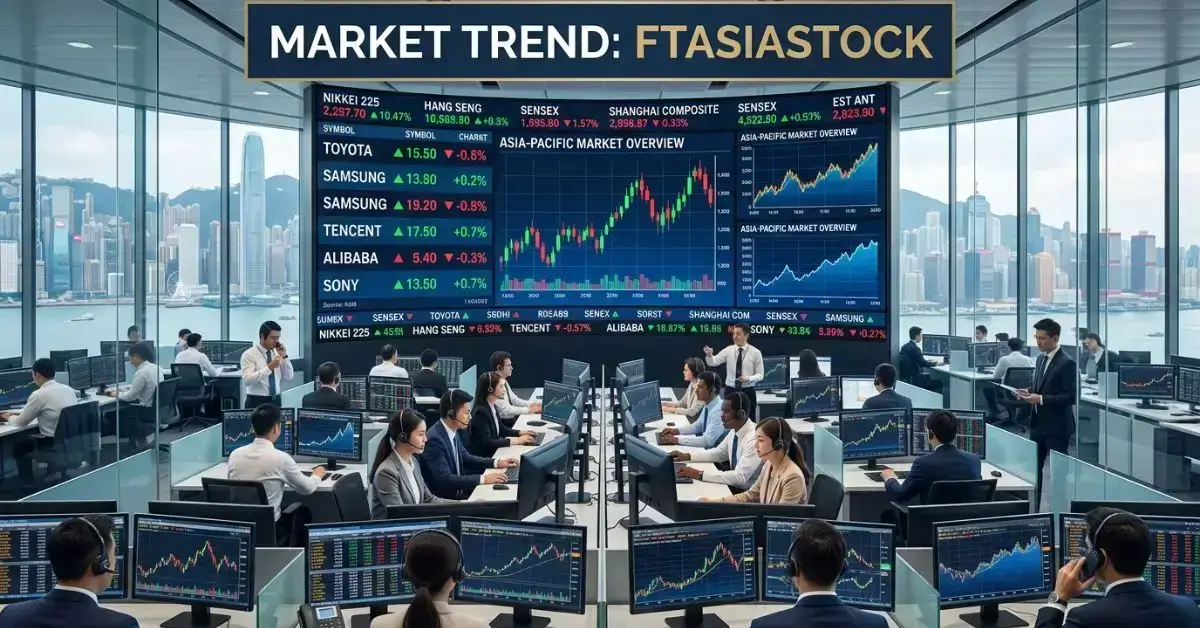
Most marketers focus on local data. They track US consumer behavior, follow domestic market reports, and build campaigns around familiar trends. That works until it doesn’t.
Global markets are deeply connected. What shifts in Asia today often shapes consumer spending, supply chains, and product demand in the US and UK within weeks. Ignoring that is like driving with one eye closed.
This guide breaks down what market trend FtAsiaStock actually means, why it matters to your marketing strategy, and how to use these insights to make smarter business decisions whether you’re running a startup or managing a growing brand.
Market trend FtAsiaStock refers to the tracking and analysis of financial and commercial movement patterns across Asian stock markets particularly how those shifts signal changes in global consumer demand, industry performance, and investment behavior that directly impact marketing strategy and business planning worldwide.
FtAsiaStock market trends track economic and commercial shifts in Asian markets. For marketers, these signals reveal where consumer demand is moving, which industries are growing, and how to align campaigns with global momentum before your competitors do.
Asia is not just a manufacturing hub anymore. It is one of the largest and fastest-growing consumer markets on the planet. Countries like China, Japan, South Korea, and India are setting trends in technology, fashion, e-commerce, and digital behavior that eventually reach Western markets.
When you study market trend FtAsiaStock data, you are essentially reading early signals. You see what products are gaining traction, which industries are expanding, and where consumer confidence is rising before that momentum crosses the Pacific.
For a marketer in the US, that kind of foresight is valuable. It gives you time to prepare campaigns, adjust messaging, and get ahead of shifts rather than react to them.
FtAsiaStock is a framework for monitoring Asian financial and stock market trends. It pulls data from major Asian exchanges Tokyo, Shanghai, Hong Kong, Seoul and presents movement patterns in a way that helps analysts and business professionals understand what is happening across sectors.
From a marketing standpoint, here is what the data actually tells you:
1. Consumer Demand Signals
Rising stocks in retail, tech, or consumer goods sectors suggest growing buyer confidence. That confidence often travels. When South Korean tech companies surge, it frequently signals stronger global appetite for electronics and digital products.
2. Industry Performance Patterns
If logistics and shipping stocks in Asia are climbing, it usually means supply chains are moving faster. That directly affects product availability and advertising timelines for brands in the US and Canada.
3. Investment Direction
Where large capital flows in Asia, product innovation and market expansion follow. Marketers who watch this know which product categories are about to scale globally.
Understanding is one thing. Using the information is where the real value is.
Here is how modern marketers apply market trend FtAsiaStock insights in practical ways:
When a product category begins trending in Asian markets say, a new type of skincare ingredient or a mobile payment method it often takes 6 to 18 months to reach mainstream US audiences.
A US-based beauty brand that tracks these trends could launch content, build SEO authority, and prepare inventory before the category explodes domestically. That early positioning is worth far more than a rushed campaign after the trend hits.
Asian markets follow their own economic calendars. Major shopping events, cultural holidays, and fiscal quarters in Asia create waves that impact global supply and demand.
A smart marketing team tracks these cycles. They know when to expect tighter supply chains, when product costs might rise, and when consumer spending is about to shift so they plan budgets and launches accordingly.
If you’re a brand thinking about entering new markets or launching new product lines, FtAsiaStock trend analysis can highlight which sectors are attracting heavy investment and consumer interest.
For example, if clean energy companies in Asia are seeing consistent stock growth, that signals global consumer movement toward sustainable products. A US marketing agency advising a client in that space would do well to know that context.
Consider a mid-sized US electronics retailer based in Chicago. Their team noticed through market analysis that demand for noise-canceling earbuds and portable audio devices was climbing fast across Asian consumer markets in early 2023.
Rather than waiting for the trend to arrive domestically, they accelerated their content marketing and PPC campaigns around those products six months ahead of their competitors. By the time the trend peaked in the US market, they already had established organic rankings, strong ad performance history, and loyal customers.
That is the practical power of understanding market trend FtAsiaStock patterns.
Not all trend analysis is good analysis. Here are the most common errors:
Reacting instead of anticipating. Most brands jump on trends after they peak. The goal is to catch them early that requires consistent monitoring, not occasional checks.
Ignoring regional context. A trend in China does not automatically translate to the US in the same form. Consumer culture, price sensitivity, and platform preferences differ. Adapt the insight, do not copy it.
Focusing only on big markets. Southeast Asian markets Vietnam, Indonesia, Thailand are fast-growing and often underreported. Some of the strongest early signals come from these smaller but rapidly expanding economies.
Treating stock data as the only metric. FtAsiaStock trend data is most powerful when combined with consumer sentiment reports, social media listening, and on-the-ground retail data from Asian markets.
| Sector | Why It Matters to Marketers |
|---|---|
| Technology & AI | Drives global product innovation and consumer expectations |
| E-commerce & Retail | Consumer behavior signals travel fast to Western markets |
| Clean Energy | Growing global demand creates new brand positioning opportunities |
| Healthcare & Wellness | Expanding middle class drives health product trends globally |
| Financial Technology | Shapes digital payment behavior worldwide |
This table is a practical reference point not an exhaustive list, but a solid starting place for marketers tracking global momentum.
You do not need to be a financial analyst to benefit from Asian market trend data. These resources make it accessible:
- Financial Times Asia – Reliable, well-sourced coverage of Asian markets with business context
- Bloomberg Asia – Deep data with sector-level breakdowns
- Google Trends – Pair with geographic filters to spot rising search interest in specific Asian markets
- Statista – Market size and consumer data organized by country and sector
Using these tools together gives you a layered picture not just what stocks are doing, but what consumers and businesses are actually doing.
Global marketing is no longer optional. Brands that only look at domestic signals are working with incomplete information. Asian markets move fast, and the patterns they set today often define what Western consumers want tomorrow.
Understanding market trend FtAsiaStock is not about becoming a financial expert. It is about becoming a smarter marketer one who sees further, plans better, and acts with more confidence.
The brands winning in 2025 are the ones that treat global market intelligence as a core part of their strategy, not an occasional reference.
It is the analysis of financial and commercial patterns across Asian stock markets to understand where industries and consumer demand are heading. For marketers, it works as an early warning system — helping predict which products, behaviors, and market shifts will emerge globally before they reach Western markets.
It gives marketers forward-looking signals to make better decisions on campaign timing, product focus, and audience targeting. Instead of reacting to trends late, you can prepare content, inventory, and ad spend ahead of demand. Works best when combined with consumer sentiment data and local market research.
Yes especially if your products connect to tech, fashion, supply chains, or consumer electronics. You do not need a financial team. Free tools like Google Trends and Financial Times Asia give enough insight to support smarter, basic strategic decisions for any size business.
Monthly works for most teams. If you operate in fast-moving sectors like tech or fashion, a weekly check is better. The goal is not constant monitoring it is staying informed early enough to act before a trend peaks in your market.
It is a strong input, not a standalone answer. Use it alongside consumer surveys, competitor analysis, and local data. Stock trends point direction they do not guarantee how or when a specific trend will land in the US, UK, or Canadian market.